Few experiences rival the unscripted wonder of an African safari—elephants silently moving through the tree line, the roar of a lion somewhere just out of sight, sundowners poured where no road reaches. But to fully experience the magic, you must arrive prepared. Perfecting your safari packing list matters more than most trips. Lodges and camps sit far from modern conveniences. Small bush planes have strict luggage limits. And resupply isn’t an option once you’re in the wild. Packing light and with intention is non-negotiable.
A day on safari begins before the sun rises. Most lodges wake guests by 5:30 AM for the first game drive—a three-to-four-hour journey through the African wilderness in an open-air vehicle, exposed to the morning chill, the midday sun, and everything in between. Temperatures can swing drastically in a single outing which makes layering a necessity. From tracking the Big Five in South Africa to wandering the open plains of the Serengeti, the safari packing list below is your definitive guide to one of travel’s greatest adventures.
Read the What I Wore: Safari in Africa to see how this list translates to real outfits.
Hello! This site incorporates affiliate links to help me continue to produce free travel guides and content for you. I only recommend products I use myself and all opinions expressed here are my own. This post contains affiliate links and I may earn a commission from qualifying purchases at no cost to you.

Suitcase: Soft-Shell Duffle
If your itinerary includes a charter flight or helicopter transfer—and many do—confirm luggage requirements with either the operator or lodge well in advance. Small bush planes have strict weight limits, generally around 33 lbs, and limited cargo space. Hard-shell suitcases are typically not permitted. A soft-shell duffle is the standard—I always reach for this lightweight waterproof duffle and pair it with packing cubes to keep everything organized and easy to find at 5:00 AM.
A few destination specific notes:
Kenya & Tanzania: Air Kenya Express and Regional Air Tanzania operate commercial bush flights to regional safari destinations including Maasai Mara, Amboseli, and the Serengeti. Both airlines require soft-shell luggage. Check their full guidelines here: Air Kenya Express Baggage Policy and Regional Air Tanzania Baggage Policy.
South Africa: Most commercial flights to the greater Kruger region arrive into Skukuza, Hoedspruit, or Kruger Mpumalanga via full-size aircraft from either Johannesburg or Cape Town. I’ve flown Airlink into these airports and had no issues checking a hard-shell suitcase. However, if you’re traveling to Kruger on a private charter, check with your operator for any luggage restrictions.
Botswana: Camps in the Okavango Delta are accessed by small bush plane or helicopter, typically departing from Maun International Airport. Mack Air and Wilderness Air are two of the most common operators in the region—both have weight restrictions and soft-shell requirements. Check directly with your lodge or tour operator for details.
Safari Clothes: Neutral, Comfortable, Layers
Practicality and comfort are the guiding principles when packing safari clothing. The goal is versatile pieces that can be mixed, matched, and re-worn. Most lodges offer daily laundry service, so there’s no need to overpack.
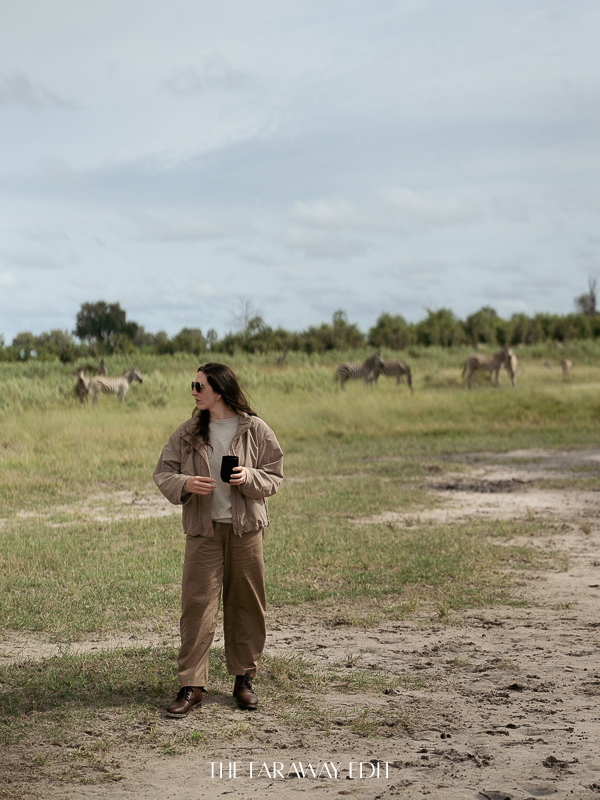
Stick to neural, earthy tones: tans and olives. Tsetse flies and other insects are attracted to dark colors and bright patterns. Avoid camouflage as well—it’s illegal to wear in some African countries where it’s reserved for military use.
Build each outfit in layers: a breathable base, a mid-layer, and a jacket for early mornings and evenings.
Tops, Bottoms & Outerwear
- Base Layer Top – Pack a handful of breathable cotton t-shirts and tanks in neutral tones for a foundation.
- Long-Sleeve Button Down – A linen button down or a performance fabric shirt goes a long way on safari: sun coverage, insect protection, and an easy layer to add or remove.
- Sweater or Fleece – Pack two: one for game drives, one for evenings at the lodge. A lightweight sweater or fleece works beautifully in the warmer months. Swap it for a proper fleece if you’re travelling in the cooler dry season.
- Pants – Two or three pairs of comfortable, neutral-colored pants cover most itineraries. The length helps protect against insects and vegetation. I typically reach for a lightweight cotton pant or a heavier utility style depending on the season. A performance material pant is also a popular and practical choice.
- Shorts – For warmer months, a couple pairs of lightweight shorts are worth having as an option for game drives and relaxing around the lodge.
- Jacket – Even in the warmer months, mornings and evenings in the bush are chilly. This water-resistant Lululemon jacket is my warm-weather go-to. Come the cooler dry season, upgrade to something with insulation: this Patagonia with a snap-in-fleece has yet to let me down. And make sure your jacket always makes it into the game drive bag.
- Waterproof Layer – If you’re traveling during rainy season, a packable poncho is worth bringing. Some lodges keep rain gear on hand for guests—confirm with yours before packing your own.
Other Clothing Essentials
- Socks – Opt for higher-ankle socks to keep your ankles protected from both insects and the bush.
- Sports Bra (or Regular Bra) – The dirt roads are wonderfully bumpy. Pack accordingly.
- Sleepwear – Lightweight and comfortable for warmer months; a long-sleeve set for the cooler dry season. This long-sleeve t-shirt is my go-to either way.
- Swimwear – Many lodges feature stunning pools with views overlooking the bush. Pack a swimsuit to cool off in between drives.
A Note on Evening Wear
Dinner is typically served after you return from the afternoon drive—often well after dark. Most guests go straight from the vehicle to the table. I do the same. Make sure you’re covered to deter any lurking mosquitos.
Safari Shoes
On safari, less is more. Two pairs of shoes cover almost every situation: one pair of closed-toed shoes for game drives and one pair of comfortable shoes for relaxing at the lodge.
- Closed-Toed Shoes – A non-negotiable for game drives and bush walks. If you plan on staying mostly in the vehicle, tennis shoes work well. Personally, I always wear these leather captain boots because they are sturdy, comfortable, and cover my ankles. For more walking-intensive itineraries, a lightweight hiking boot offers more support and durability—Merrell’s are a reliable choice.
- Slides or Sandals – A comfortable pair for the lodge, pool, and the hours in between.
Safari Accessories & Miscellaneous Essentials
The right extras make a meaningful difference on how comfortable and present you can be on safari.
Accessories
- Bag for Game Drives – A zip tote or small backpack keeps everything accessible. I use my water-resistant nylon Longchamp Tote and add a camera insert—it’s great to throw everything in, zip close, and clean after.
- Scarf – One of the most versatile items in your bag. A lightweight scarf functions as added warmth on cool mornings, a dust shield, and protects from dust and insects.
Bug & Sun Protection
- Bug Spray – An important line of defense against disease-carrying mosquitos. I travel with both DEET wipes, which are easy to pack and highly effective, and a gentler travel-size baby-safe bug spray for when bugs are less aggressive.
- Sunscreen – The African sun is strong and sunscreen is a permanent in your bag. I use Elta MD Sunscreen on my face along with a separate body sunscreen.
- Sun Hat – Whether you prefer a classic ball cap or a wide brim hat, choose one that stays put. A chin strap is worth having—when your guide hears of a priority sighting, speed is not optional. I love my waxed Barbour cap for its water-resistant material.
- Polarized Sunglasses – Essential. Polarized lenses cut the harsh midday glare and make it easier to spot animals hiding in the shadows.
- Malaria Medication – Many safari destinations fall within malaria zones. Visit an international travel clinic and consult with a medical professional to determine what’s recommended for your itinerary. I am not a medical professional and this is not medical advice.
Miscellaneous Essentials
- Plug Adapters – Plug sockets vary across the continent and most African countries operator on 220-240V electricity. Here’s a quick guide to common plug types in popular safari destinations:
- Binoculars – A good pair of binoculars reveal an entirely different side of the bush. Birds, distant animals, and the fine detail of animal behavior. They are worth the space they take.
- Sanitizing Hand Wipes – Individually packaged wipes are useful for long game drives where running water is nowhere nearby. Toss a few in your bag.
- Reusable Water Bottle – Many lodges provide a reusable water bottle for your stay. Confirm with yours in advance and if they do, leave yours at home.
- Camera – The wildlife encountered on an African safari warrants more than a phone camera can capture. A mirrorless Sony Camera paired with a 55-210mm lens is an excellent starting point.
Have questions? Drop them in the comments—I’m happy to help.
Safari Packing Favorites
Somewhere faraway is calling. More from the Safari Edit.