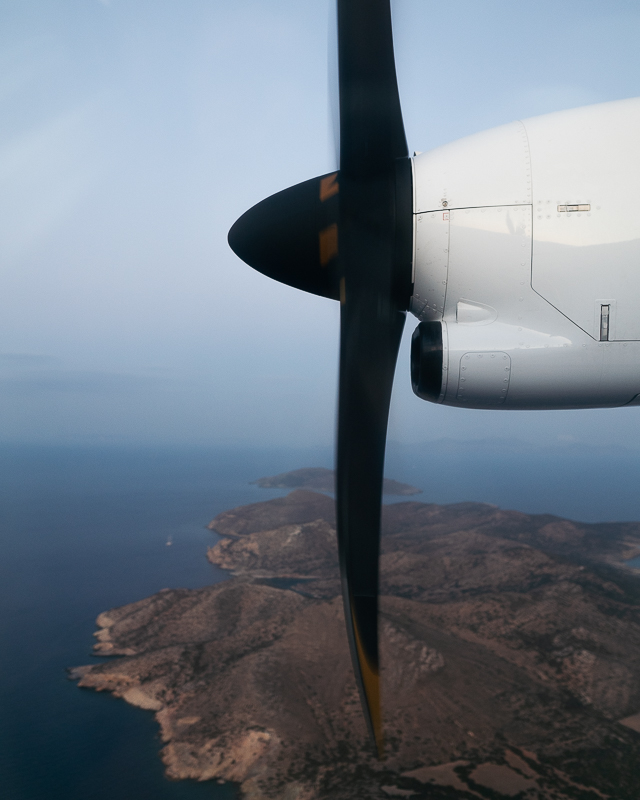
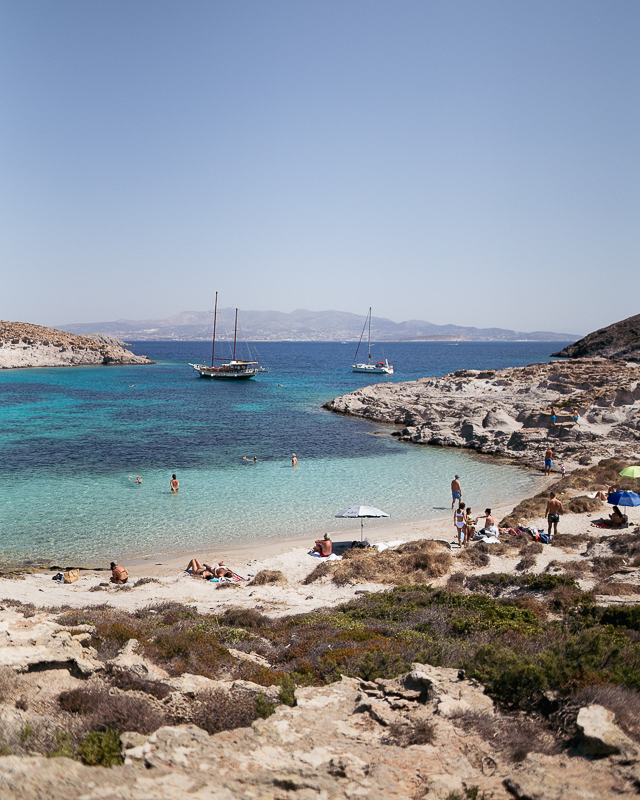
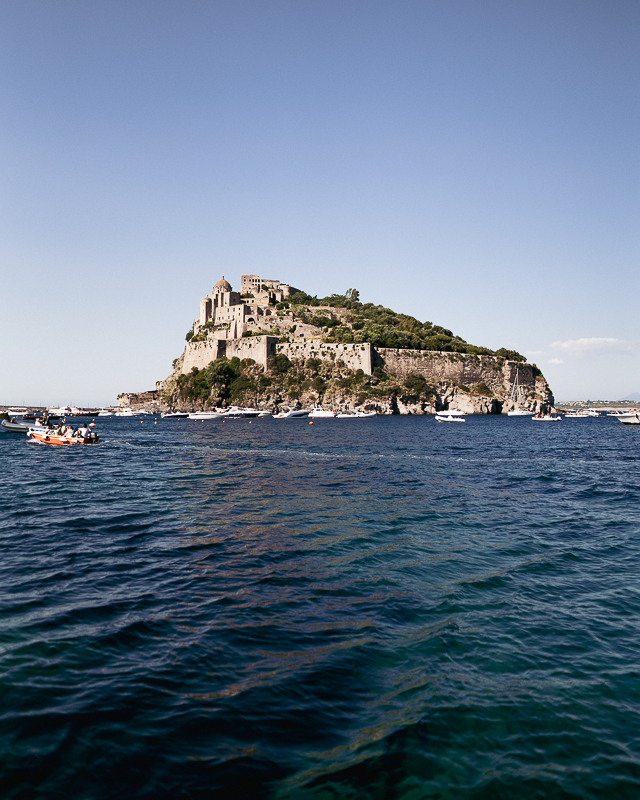
The Cyclades and the Ionian Islands are both Greece—and that’s about where the similarities end. One rises stark and volcanic from the Aegean with sun-warmed stone and whitewashed architecture accented by a particular shade of blue. The other spills into the Ionian Sea to the west—untamed, draped in cypress trees and wild herbs. The water here is an iridescent turquoise that belongs to an entirely different Greece. The Cyclades and the Ionian Islands are both extraordinary, but they are not interchangeable. Here’s what you need to know before you decide.
Hello! This site incorporates affiliate links to help me continue to produce free travel guides and content for you. I only recommend products I use myself and all opinions expressed here are my own. This post contains affiliate links and I may earn a commission from qualifying purchases at no cost to you.
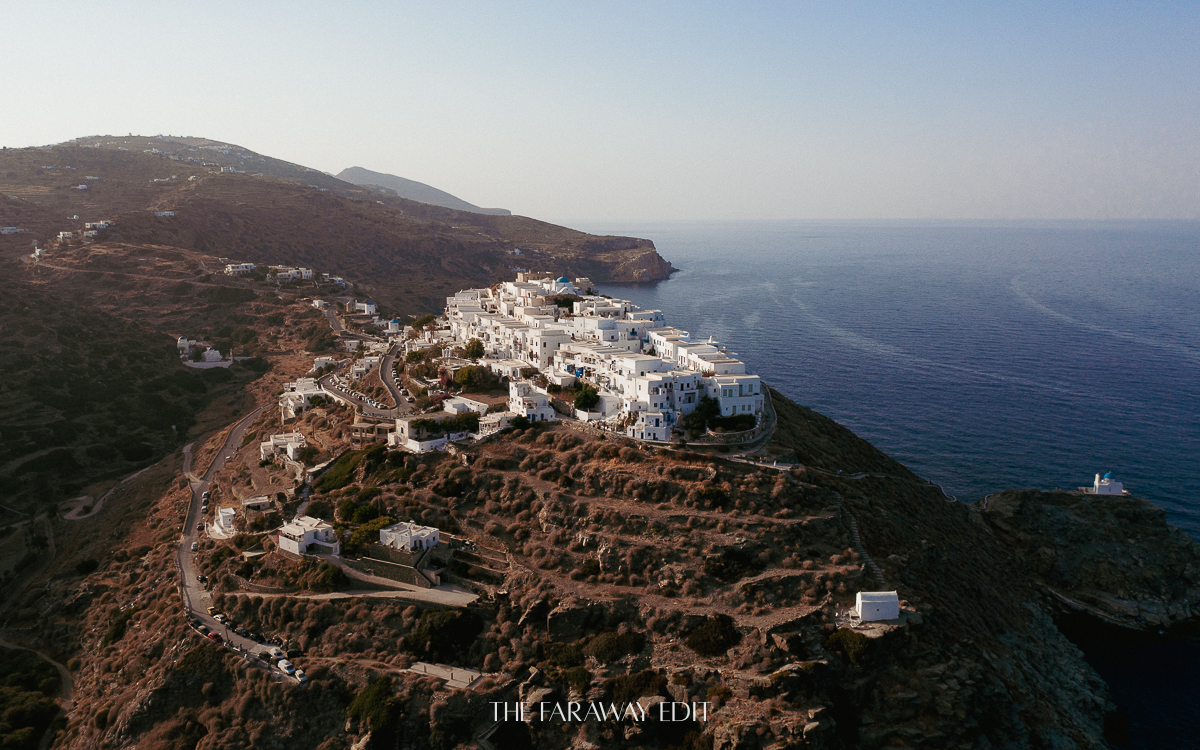
The Cyclades: Dramatic, Cinematic, Iconic
The Cyclades are the version of Greece that ends up on mood boards and magazine covers—and for good reason. The whitewashed villages. The blue-domed churches. Water that shifts from cobalt to sapphire depending on the hour. Over 200 islands scattered across the Aegean, though just 24 are inhabited year-round, make up the famous archipelago. Each has its own character, but they all share a certain visual aesthetic: elemental landscapes, white architecture, and a quality of light that makes everything look slightly unreal.
What’s less advertised is the depth the Cyclades offer. There’s the version everyone knows—Santorini at sunset, Mykonos in full summer swing, infinity pools carved into the cliffs—and it’s as beautiful as it looks. But there’s another version for those willing to look further. Milos and its otherworldly landscapes; Sifnos and its gastronomic soul; Folegandros, windswept and genuinely untouched. The Cyclades reward those who travel slowly—pick two to three islands and resist the urge to rush through. The magic lies in staying long enough to find your café, your beach, your taverna.
Getting There and Around
Athens is the gateway to the Cyclades, with ferries running from Piraeus port to most islands. A handful of the larger islands here have airports, with most flights connecting through Athens. Between islands, ferries are the primary mode of transport. One thing worth noting: the Meltemi wind peaks in July and August and can cause ferry delays and cancellations. If you’re island-hopping, build in flexibility. Once on the ground, getting around depends on the island. Quads are a popular choice on smaller islands, whereas a rental car is useful on larger islands like Naxos and Sifnos.
Cycladic Islands to Know
Santorini draws crowds by the hundreds to its golden sunsets. The clifftop towns of Oia and Fira offer caldera views that have made the island iconic.
Mykonos brings the energy. Its beautiful Chora—the main town—blends charm with glamour and nightlife that runs until sunrise.
Paros strikes a near-perfect balance. Intimate fishing harbors, a lively authentic town, and breathtaking beaches—all without the intensity of more famous islands.
Naxos is the largest of the Cyclades and a quiet gem. Long sandy beaches line the west coast while the mountainous interior holds ancient marble quarries and charming villages.
Milos holds otherworldly appeal with lunar beaches, ancient sea caves, and a harbor carved from a volcanic crater.
Sifnos is where the chefs of Greece take their holidays. Ceramic workshops that have been running for centuries, and revithada slow-cooked in clay pots by someone who learned from her grandmother—reasons enough to visit.
The Ionian Islands: Green, Wild, Quietly Extraordinary
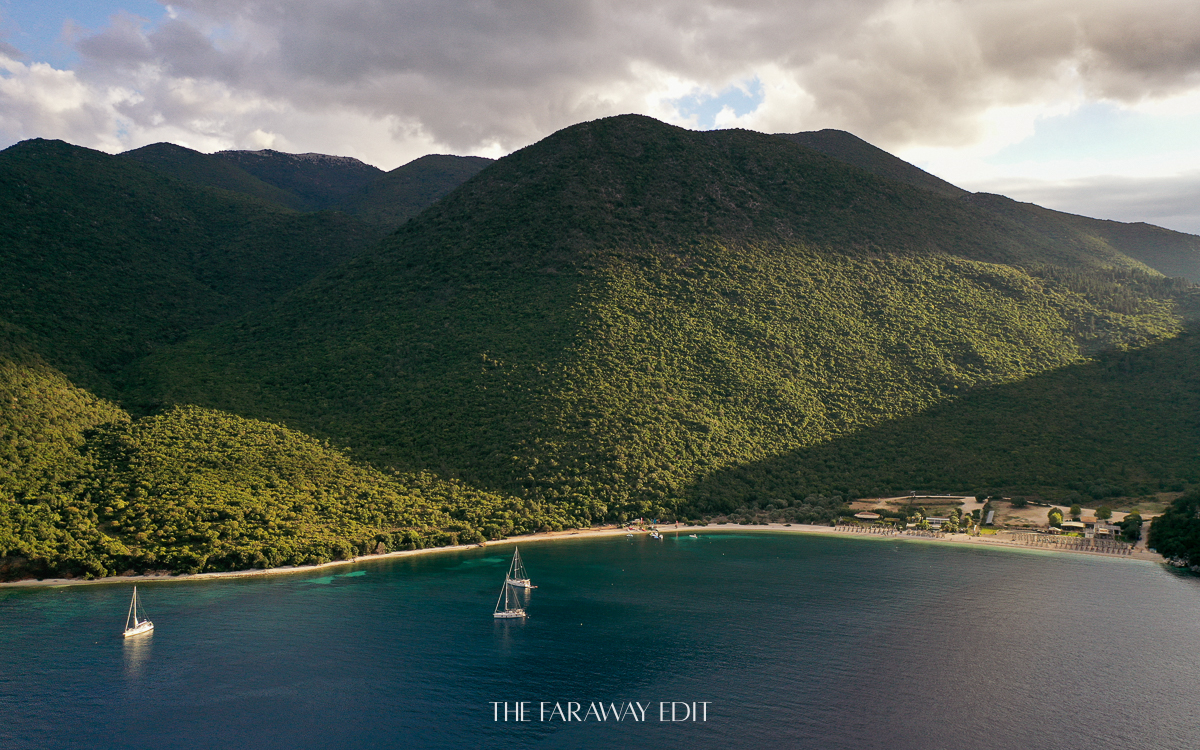
The Ionian Islands are a different Greece entirely—and that’s precisely what makes them worth knowing about. Where the Cyclades are raw and volcanic, the Ionians are lush and green. The interior is covered in olive groves and cypress trees while the coastlines are dotted with pastel port towns. The sea here is a particular shade of electric blue that’s impossible to replicate and stops you mid-sentence.
Strung along Greece’s western coast, the Ionian Islands are closer to Italy than Athens, shaped by centuries of Venetian and British rule that lingers in the architecture, food, and unhurried elegance. The crowds haven’t caught on yet. The Ionian Islands are quieter, and in many ways more surprising.
Getting There and Around
Corfu, Zakynthos, and Kefalonia all have international airports with direct seasonal flights from across Europe—Corfu being the most connected. Lefkada is the exception—connected to the mainland by bridge and a five-hour drive from Athens. On all the larger islands, renting a car is essential.
Ionian Islands to Know
Corfu is the most visited and varied. Its UNESCO-listed Old Town is full of charm with Venetian facades and narrow streets. Beyond the town, the north end of the island transitions to cypress forests and hidden coves that feel entirely different from the busier south.
Kefalonia is arguably the most strikingly beautiful island in all of Greece. Myrtos and Fteri Beach feature staggering limestone cliffs that drop to water in an impossible shade of blue. The rest of the island is just as stunning—green mountains, colorful villages, and Robola wine made from grapes native only to the island. Explore the Kefalonia Travel Guide.
Zakynthos draws most visitors to its famous Navagio—Shipwreck Beach—and the view from the clifftops above one of Greece’s most photographed sights. The island also has a reputation for its lively nightlife in resort towns like Laganas.
Lefkada is consistently underrated. Porto Katsiki and Egremni are some of the finest beaches in the Mediterranean. The island has a genuine local flair that has long disappeared from more internationally known Greek Islands.
Paxos is the smallest and most intimate. Tiny olive groves and sea grottos surrounded by crystalline water.
How to Choose
Choose the Cyclades if you’re drawn to the iconic Greek island experience—whitewashed architecture, dramatic barren landscapes, and a well-worn culture of island-hopping. Go in shoulder season if you can.
Choose the Ionian Islands if you want a different side of Greece. A greener, wilder version with fewer crowds. Rent a car and explore the breathtaking scenery. These larger islands, particularly Corfu, are logistically well-suited to families.
The honest answer? Both archipelagos are distinct enough—and rewarding enough—to justify separate trips entirely. Greece has a way of drawing you back.
Greek Island Packing Favorites
Somewhere faraway is calling. More from the Greece Edit.