I stumbled upon Atzaró Okavango Camp by happy accident. Flooding in a different region left me reworking our itinerary a short eight weeks before departure—and it turned out to be the best change I never planned for. The luxury safari lodge is set in Botswana’s Okavango Delta, one of the only inland deltas on the planet, a river that never reaches the sea. Seasonal flooding feeds the green oasis, creating a habitat so diverse it barely feels real.
Reaching the Delta is part of the ritual. We flew into Maun International Airport, Botswana’s gateway to the one-of-a-kind ecosystem, cleared customs, and transferred onto a helicopter with nothing but a backpack full of camera gear and a carefully packed duffle. Luggage restrictions are strict out here and you learn quickly to pack smart. From there, our adventure began.
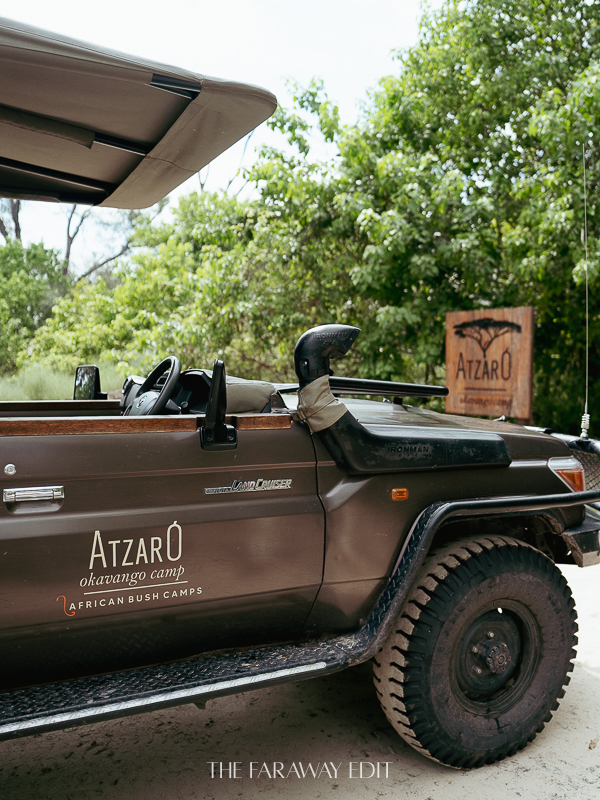
The Okavango Delta
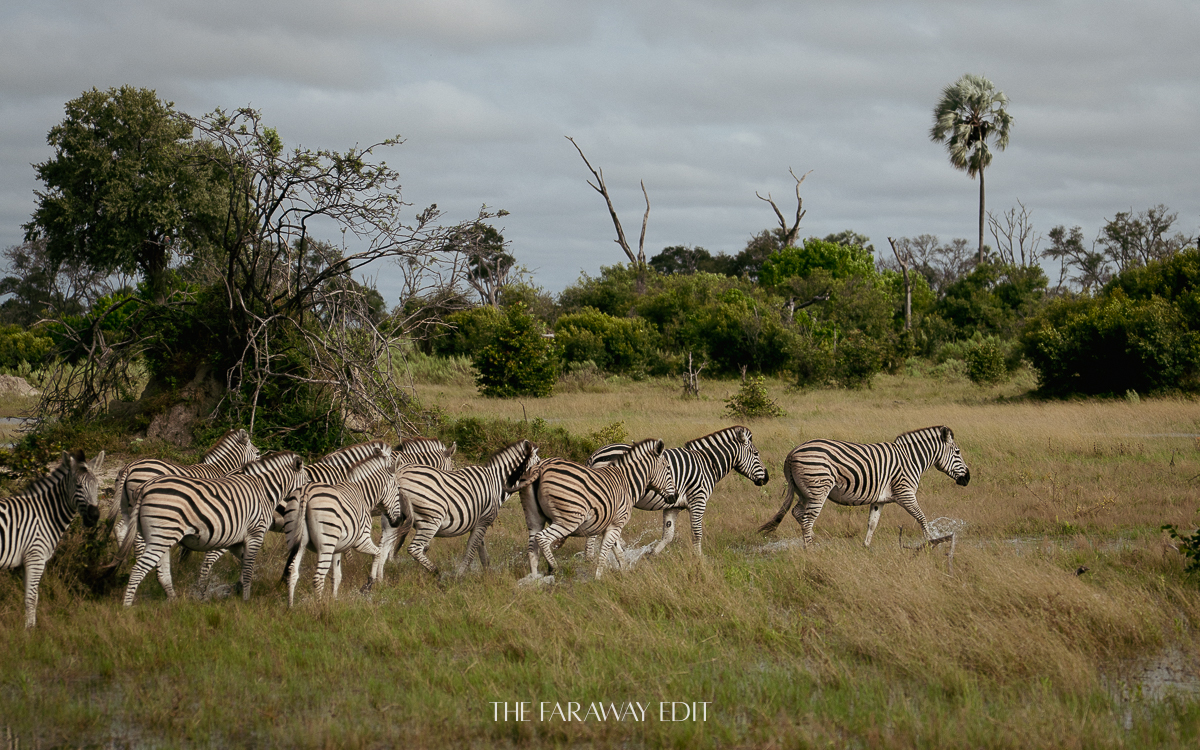
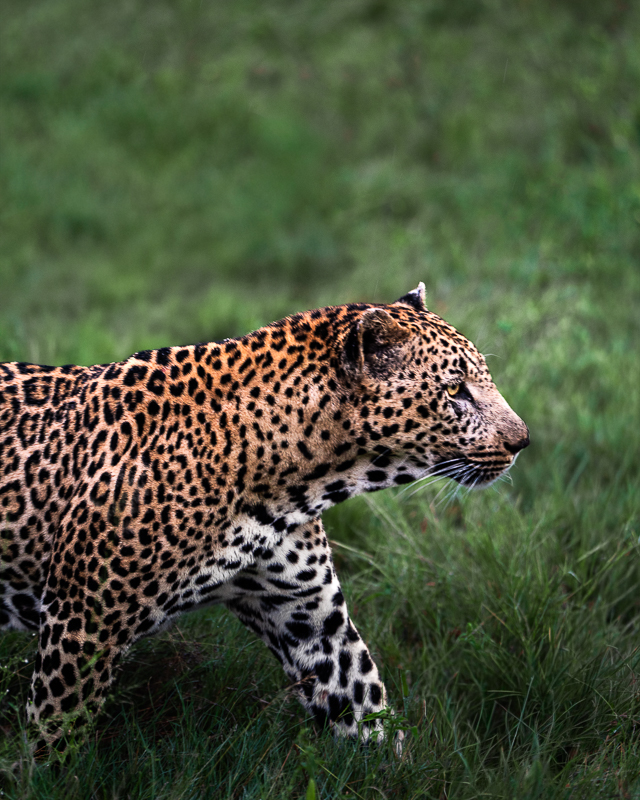
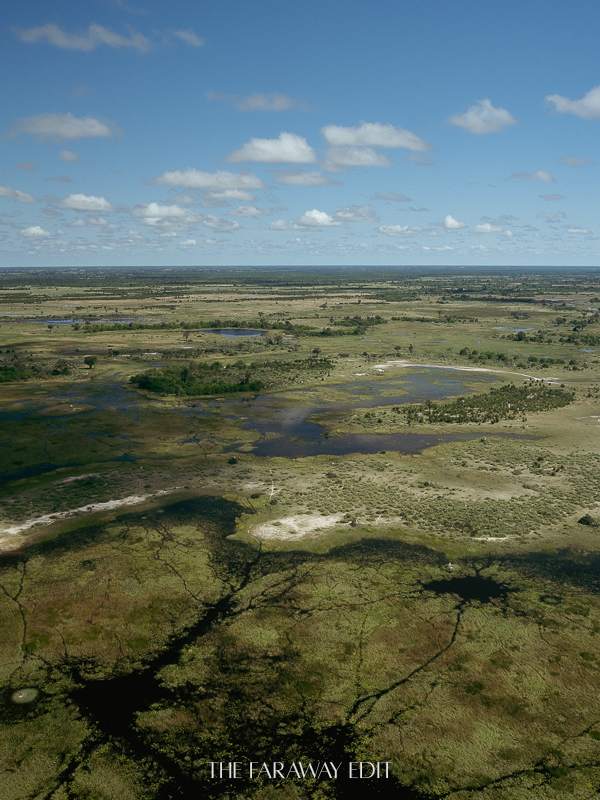
Water travels thousands of miles from the Angola Highlands to Botswana, where it fans out into a maze of channels and islets, forming the Okavango Delta, before it vanishes in the Kalahari Desert. Flooding begins in April and peaks in June, marking the start of high season when the Delta is at its fullest and wildest. The flood draws towers of giraffes, parades of elephants, and dazzles of zebras—along with the predators that follow: lions, cheetahs, hyenas, even the endangered African wild dog. Over 400 species of birds fill the skies, weaving song into silence.
Atzaró Okavango: The Camp
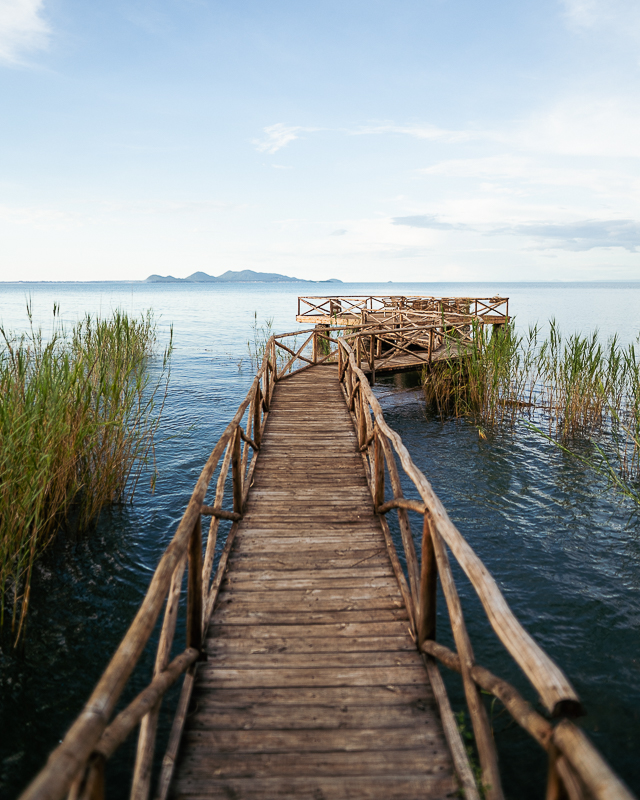
A maze of raised wooden walkways connects Atzaró Okavango, rising above the floodplain and weaving through tall grasses and stands of trees. There’s no cell service here. No other lodge or village for miles. Despite the seclusion, there’s no shortage of amenities—or animals.
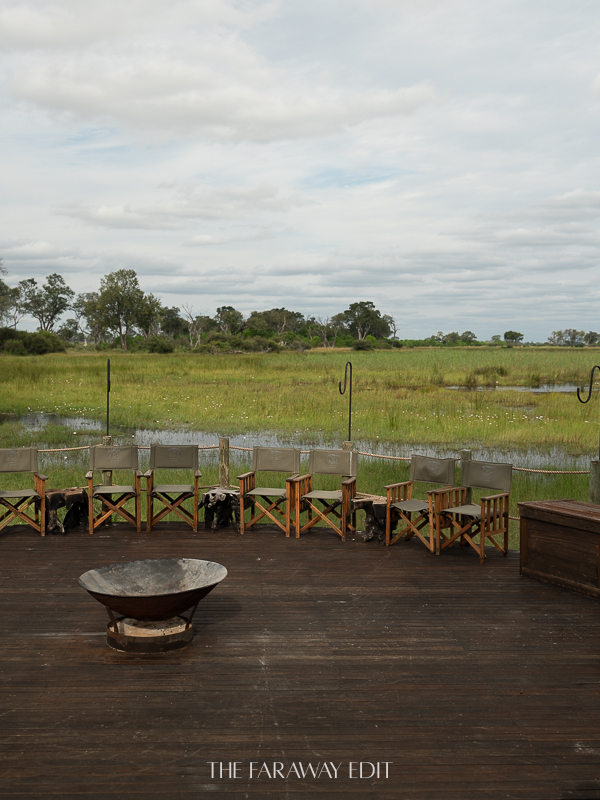
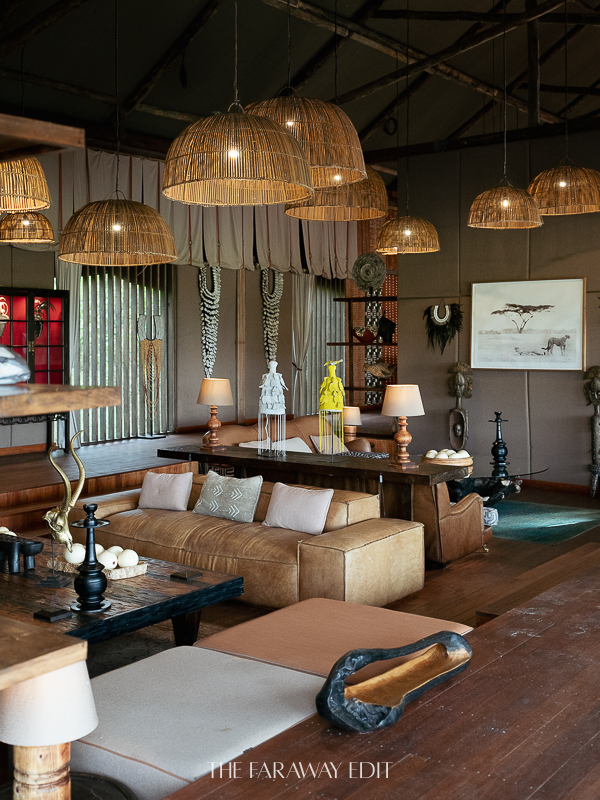
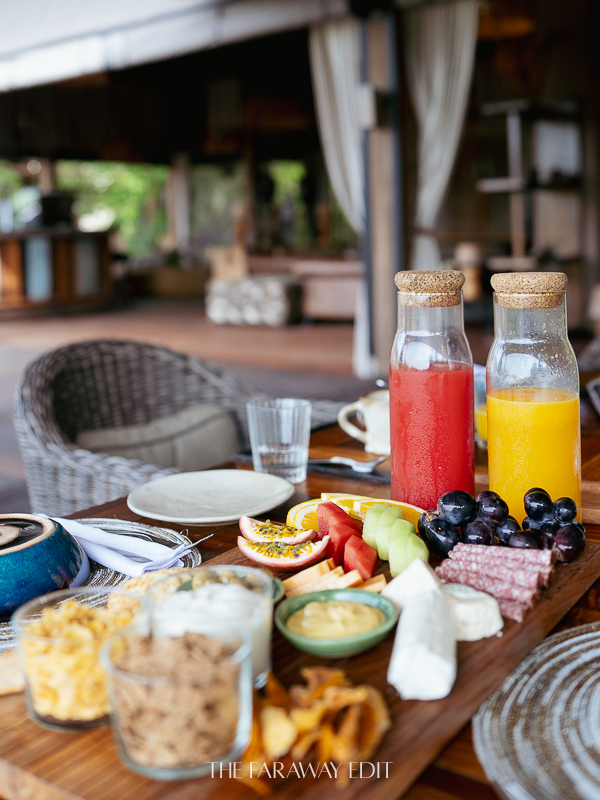
The main lodge sits at the heart of it all, open and unhurried, facing the Delta. A circle of chairs surrounds the fire pit, just steps from the palm bar—the perfect spot to watch elephants and giraffes move through. Half the deck opens straight to the sky; the other half is covered, outfitted with leather seating and lights that sway softly in the wind. Meals are set up on the main lodge deck—every one of them delicious and every one of them with a view.
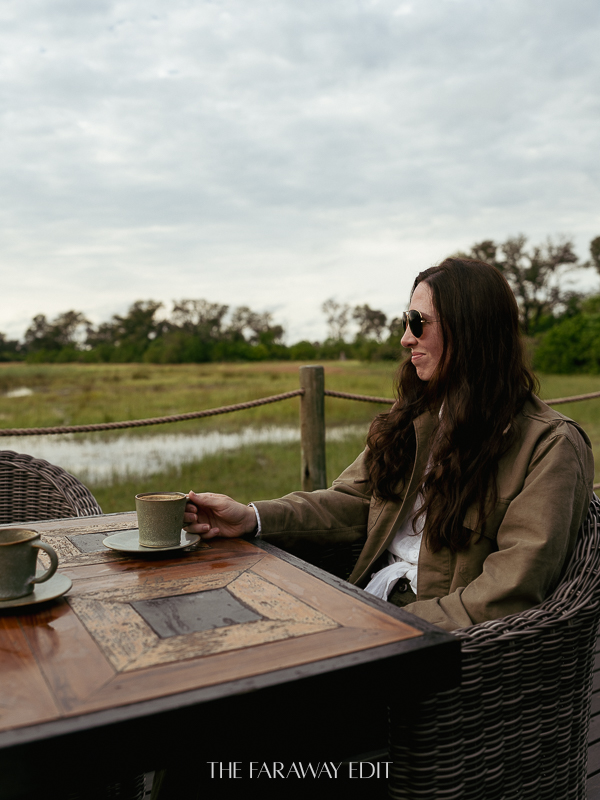
The observation deck flanks the main deck and doubles as the perfect spot for morning coffee up top and a wine cellar below. Beyond it, a larger pool, spa, and fitness center round out the days between drives.
Luxury Villa Suite
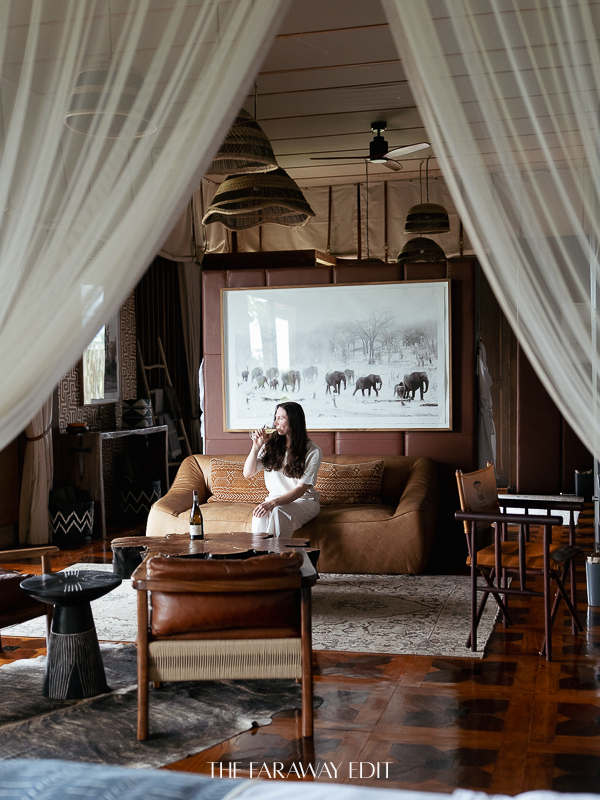
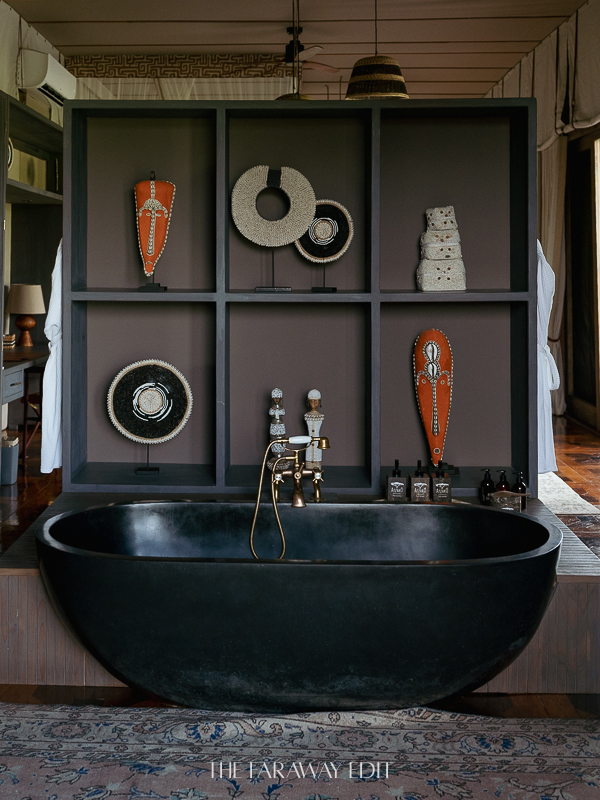
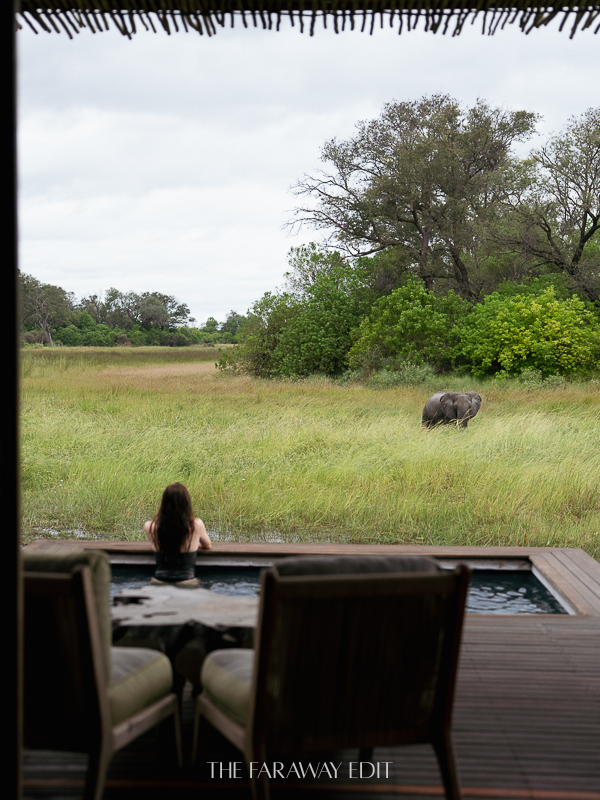
The tented suite hardly felt like a tent. Canvas walls, warm wood, a private plunge pool, and an outdoor soaking tub—all open to the floodplain. We dipped in both, cooling off in the heat of the day. Inside, the space was sprawling. Room enough for a proper sitting area with leather seating worn in just right. The bathroom held its own with a double vanity featuring stone sinks and a striking black stone tub. We’ve stayed in a lot of beautiful rooms. This one’s hard to beat—and entirely immersed in the wild.
And the Delta was quick to remind us how wild it is. Elephants and hippos moved through the reeds just beyond our pool. Leopard prints on the walkway outside our room one morning explained why you’re not allowed to walk unaccompanied after dark. A honey badger scuffled under our suite one night, equal parts thrilling and terrifying.
Safari Drives
The safari drives in the Okavango Delta are unlike anywhere else I’ve ever experienced. Almost no roads exist—just a landscape half underwater, wild animals, and guides who know how to read both. Botswana has strict caps on beds and permits per concession, meaning fewer camps and fewer vehicles. Each sighting felt earned, pieced together from alarm calls, circling vultures, and animal tracks. No one knew what each drive held and there was no set time to return to camp. The bush was our guide and our clock.
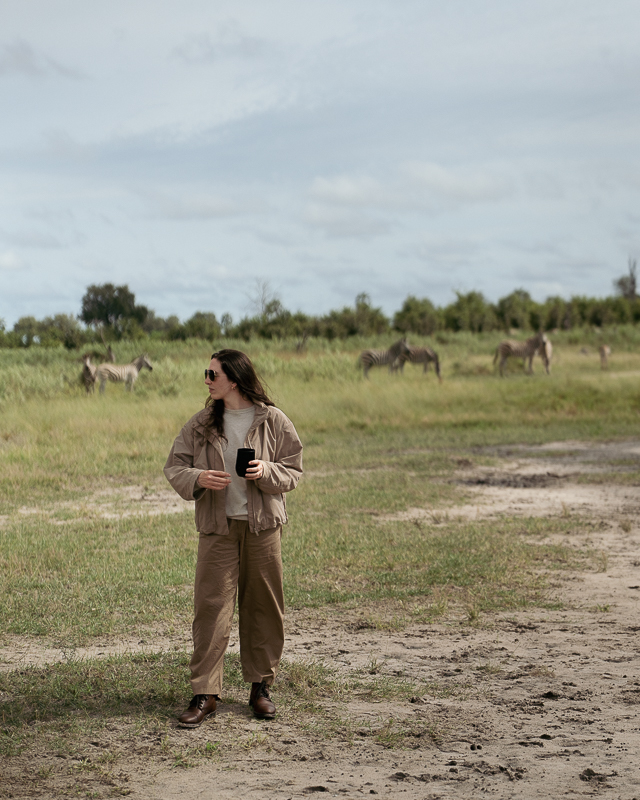
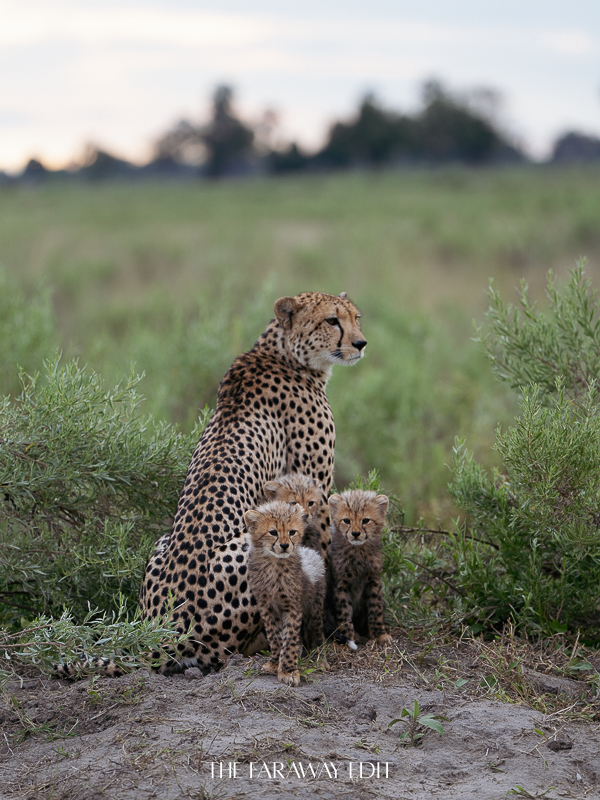
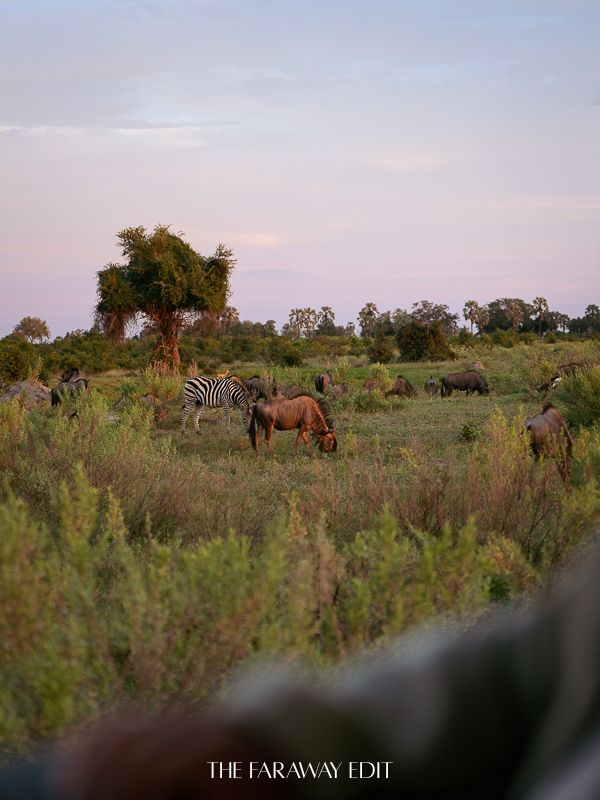
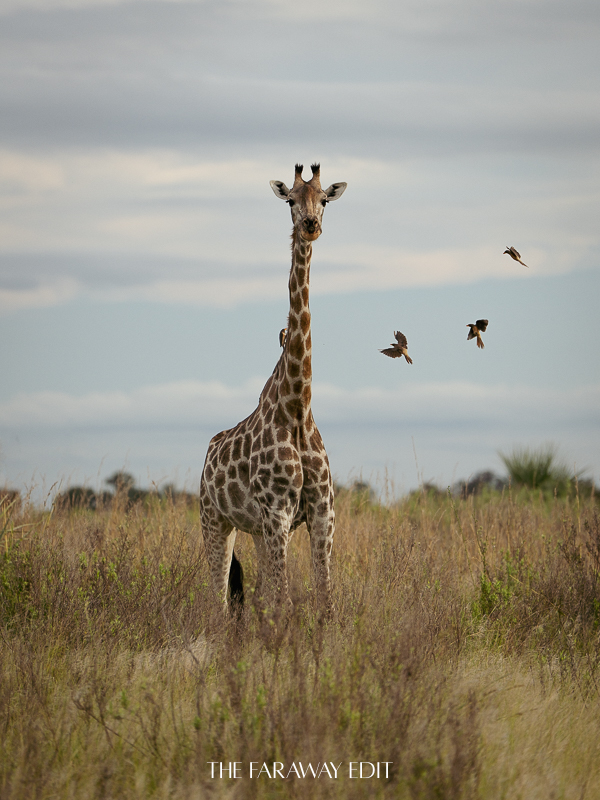
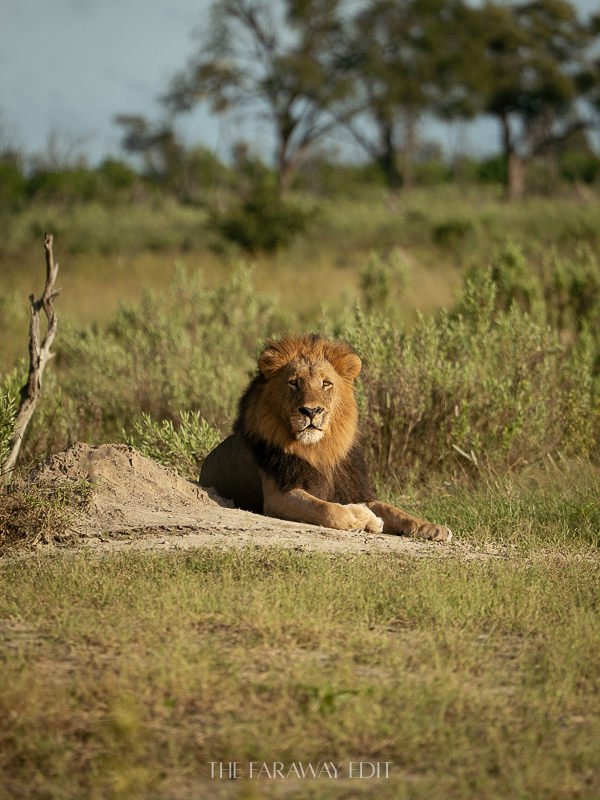
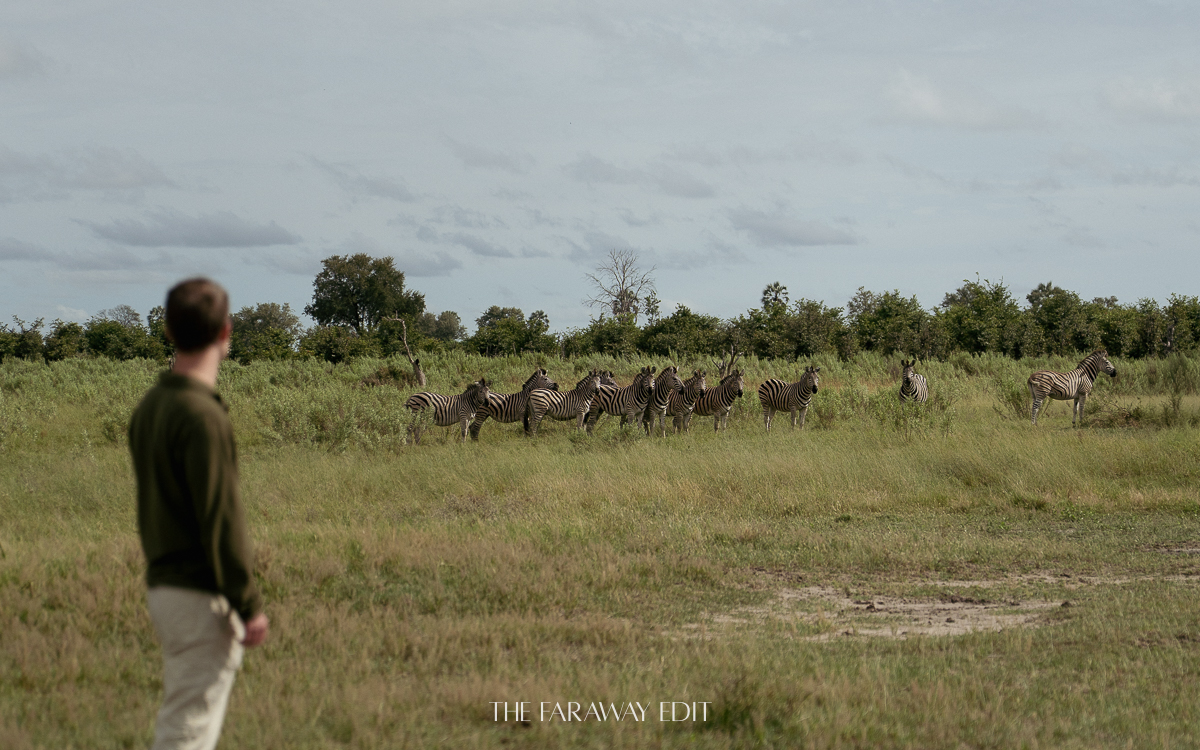
Male lions resting through the heat of the day. Giraffes seemingly everywhere we turned. Herds of zebra and wildebeest moving across the floodplain. Birds at every turn. Then, on one drive, small ears and big ears appeared in the distance—a cheetah crouched on the remnants of a termite mound, wild dogs further out. We stopped by the cheetah and four cubs emerged from hiding behind her. One of the most special sightings I’ve experienced.
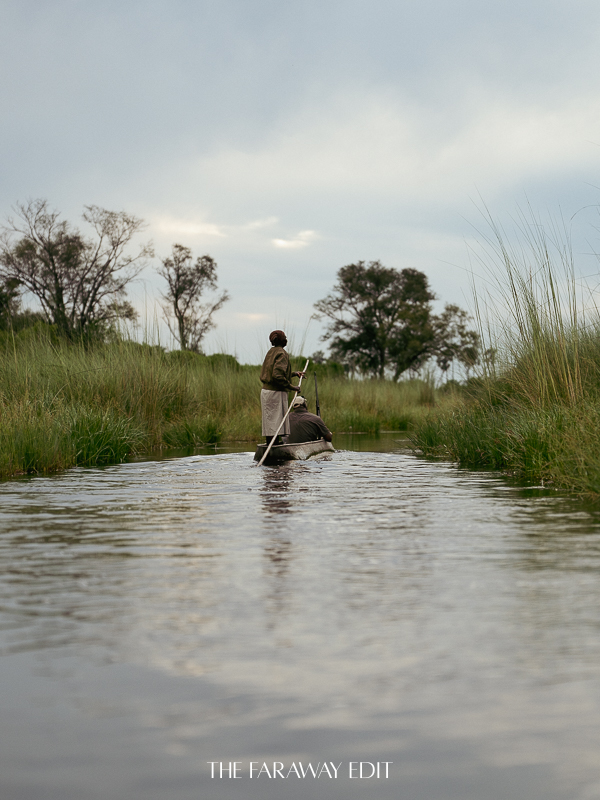
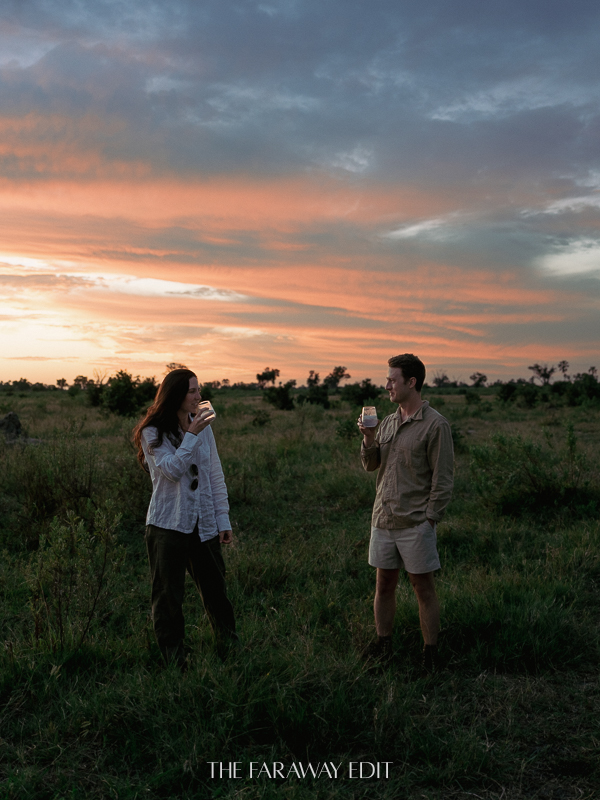
On every drive, we paused for coffee or sundowners out in the bush—time to stretch our legs and take in the landscape. One evening we swapped the vehicle for a mokoro, gliding through the channels with polers from the local village. And then there were the sunsets. I’ve watched a lot of them. Nothing compares to the one that closed out our last evening in the Delta.
Atzaró & African Bush Camps: The Community
We were welcomed to Atzaró Okavango with cheerful song and dance and a refreshing ginger concoction. One of the things that struck me most was how genuinely warm the staff were—not just with us, but with every guest no matter how young.
That warmth isn’t incidental. Atzaró Okavango is operated in partnership with African Bush Camps, whose nonprofit foundation invests in the rural communities around its camps, supporting schools, clinics, and conservation efforts. Every guest stay contributes to that work, so the impact reaches beyond the camp.
We saw it firsthand. Our guide showed us the home his mother lives in as we passed through the local village on the way to our mokoro excursion. Our polers were from that same village, most speaking little to no English, but knowing the waterways like the back of their hand.
It’s easy to come to the Okavango Delta for the wildlife. What stayed with us wasn’t just the ecosystem—it was the people as well. The guides, polers, and staff who welcomed us like family from the moment we arrived.